Commercial Outdoor Camera Installation: Weatherproof Guide
When vandals damaged properties in your portfolio, the insurance claim revealed a costly truth: outdoor camera systems weren't capturing usable footage. Weathered lenses, water-damaged connections, and sun-bleached images meant significant losses.
Commercial properties with properly weatherproofed outdoor surveillance experience fewer disputed claims and lower premiums. Yet most property managers discover their outdoor camera installations fail due to Brisbane's harsh subtropical climate.
You install what seems like quality cameras. Condensation appears inside housings. Sun damage creates white-out images. You're replacing half your system because nobody explained the difference between "weather-resistant" and surviving Queensland storms.
This guide addresses implementing outdoor camera systems that withstand Brisbane's weather extremes while delivering portfolio-wide performance. You'll discover weatherproofing specifications that prevent premature failure and strategies that reduce per-property installation expenses.
Understanding IP Ratings and Weather Protection Standards
IP Rating Breakdown for Commercial Applications
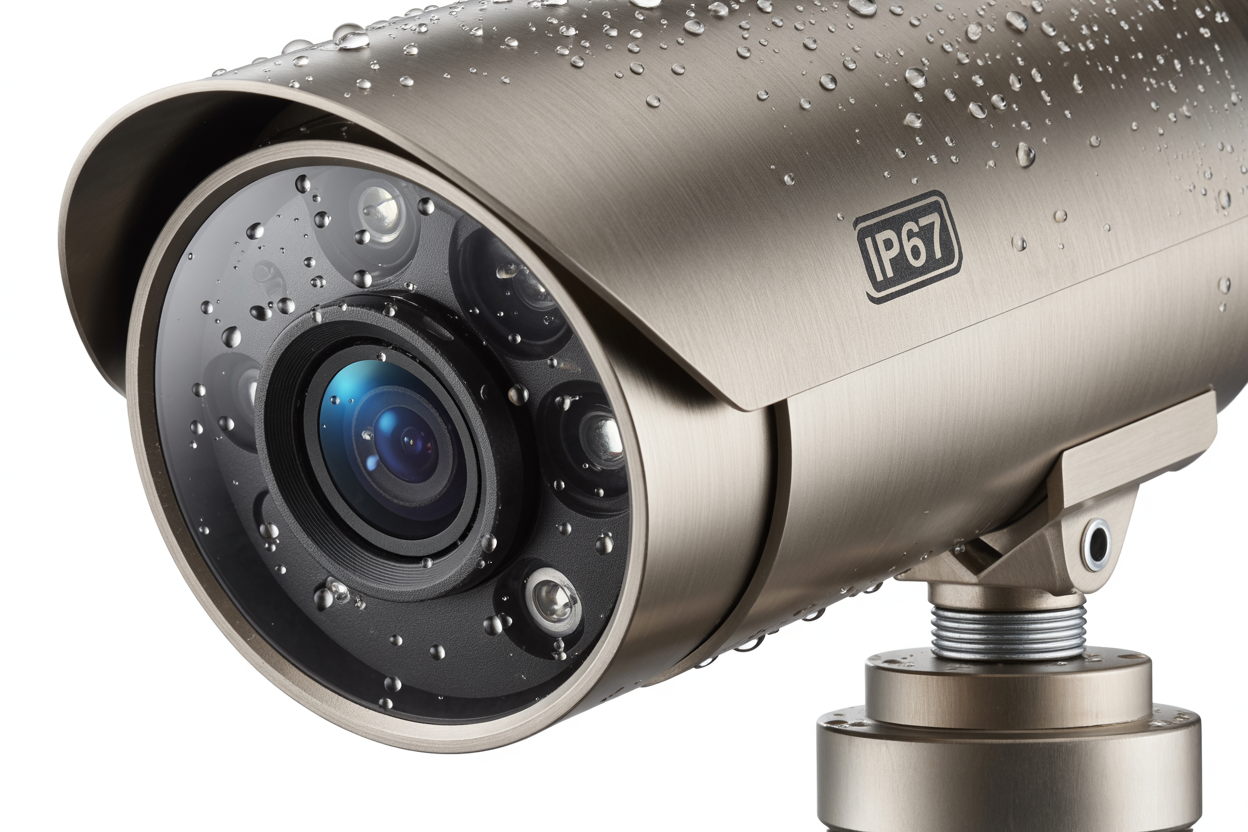
The IP rating system has two digits, and both matter for your portfolio. That first digit? It's about dust protection, rated 0-6. The second digit covers water resistance, rated 0-9. So when you see IP67, you're looking at maximum dust protection (the 6) and protection against temporary water immersion (the 7).
Here's the breakdown that actually matters:
IP66 - Dust-tight, protected against powerful water jets. Brisbane storms deliver more than "jets" of water
IP67 - Dust-tight, protected against temporary immersion. This is your minimum for Brisbane's subtropical climate
IP68 - Dust-tight, protected against continuous immersion. Necessary for flood-prone areas
Most projects fail because someone spec'd IP65-rated cameras to save money. Those savings turn into replacement costs when moisture gets inside.
Manufacturers can claim IP67 compliance based on factory testing that doesn't account for installation quality. A perfectly rated camera becomes IP54 when an installer leaves a cable gland loose.
For portfolio managers: specify IP67 minimum, verify the rating covers the entire camera assembly including junction boxes, and make sure your installation contract guarantees the IP rating survives installation.
Brisbane's Climate Challenges
Brisbane's subtropical climate creates perfect conditions for camera equipment failure. Year-round humidity, extreme UV, and temperature swings. When storms dump heavy rain, water finds every unsealed connection.
Camera housings can hit extreme internal temperatures, cooking electronics. UV exposure degrades housings slowly, showing cracks, then brittleness. Once UV damage creates micro-cracks, moisture gets inside and the IP rating means nothing.
IK Ratings: Vandal-Proof Protection
IP ratings handle weather, but what about vandals? IK ratings measure impact resistance on a scale from IK01 to IK10 (can survive heavy hammer strikes).
For commercial outdoor camera installation across property portfolios, you're looking at IK08 minimum (can survive solid punches or thrown rocks) or IK10 for high-risk locations. Vandal-resistant cameras significantly reduce replacement costs according to industry data.
Different property types see different vandalism patterns. Retail spaces get targeted at entry points. Industrial properties see loading dock cameras damaged during break-in attempts. Office buildings face parking structure vandalism. Every property type needs vandal-resistant protection at ground-level camera locations.
Critical Weatherproofing Components and Installation Requirements
Cable Management and Connection Sealing
Here's where most commercial outdoor camera installation projects fail: the camera housing can be perfectly IP67-rated, but if your cable connections aren't sealed properly, you've got equipment failure coming.
Weatherproof junction boxes are non-negotiable. You need IP66-rated minimum junction boxes at every camera location, positioned so cable runs enter from below (water runs down, not up). Inside that junction box, you're connecting your camera pigtail to your main cable run, and that connection point needs to be sealed with dielectric grease and heat-shrink tubing.
Cable gland threading matters more than people realize. PG threading (European standard) and NPT threading (American standard) aren't interchangeable. Using the wrong gland with the wrong housing creates gaps that let moisture through.
Sealants are where installers cut corners. Silicone sealant degrades in UV exposure and doesn't bond well to powder-coated surfaces. Polyurethane sealants cost more but last much longer in direct sunlight. For portfolios, that's extra in materials but significant savings in premature failures.
The most common cable entry point failure? Cables entering from the top of the junction box. Water runs down the cable sheath, finds the entry point, and sits in the junction box.
Mounting Hardware and Power Supply Protection
Mounting brackets seem like an afterthought until you're replacing cameras because the brackets corroded. Stainless steel versus powder-coated steel isn't just about aesthetics, it's about whether your brackets survive Brisbane's coastal humidity.
Marine-grade stainless steel costs more per bracket than standard powder-coated steel. But replacing corroded brackets requires new equipment, labor, camera remount, and re-aiming.
Lightning protection is non-negotiable in Queensland. Brisbane averages numerous thunderstorm days per year, and lightning-induced surges destroy unprotected cameras regularly. Ethernet surge protectors per camera location represent investment, but a single lightning event can destroy every camera, every network switch, and every NVR in the system.
Lens and Sensor Protection
Brisbane's year-round humidity creates constant condensation challenges for camera lenses. Anti-fog coatings per camera during initial installation prevent the condensation that ruins footage quality. Heated housings with built-in defoggers solve the problem completely.
UV-resistant lens materials are mandatory for Brisbane installations. Standard acrylic domes yellow and haze under Brisbane's UV exposure. Polycarbonate lenses with UV-resistant coatings maintain clarity for extended periods.
Strategic Camera Positioning for Weather Exposure Minimization
Optimal Mounting Locations by Property Type
Strategic positioning reduces weather exposure substantially before you even factor in IP ratings and protective housings.
Office buildings offer natural protection. Under soffits and eaves, you get overhead coverage blocking direct rain and reducing sun exposure. Parking structure overhangs provide similar protection.
Retail spaces use storefront awnings as natural camera mounting points with built-in weather protection while maintaining clear views of entry points.
Industrial properties leverage warehouse eaves extending from walls, creating sheltered mounting zones. Covered walkways offer protected positions maintaining sight lines.
Sun and Rain Protection
Brisbane's sun destroys cameras faster than rain. East and west-facing cameras get direct sunrise and sunset angles, creating lens flare.
North-facing cameras in Brisbane get consistent lighting without direct sun exposure. Position cameras facing north when possible.
Sun hoods or visors extending beyond the camera lens block direct sun. Angled mounting prevents water pooling on housings. A downward angle lets water run off.
Drip loops save cameras. Cable routing that loops below the camera entry point creates where water drips off instead of running into connections.
Compliance and Legal Requirements
Queensland Privacy Laws and Outdoor Cameras
Privacy compliance isn't optional. The Privacy Act and Surveillance Devices Act create specific requirements for commercial outdoor camera installation that affect where you can point cameras, what you can record, and how you notify people they're being monitored.
You can record areas where people don't have a reasonable expectation of privacy. That means building exteriors, parking areas, loading docks, and common areas. What you can't do is point cameras into neighboring residential windows, focus on public streets beyond your property boundaries, or record sensitive areas.
You need clearly visible signs at every entry point indicating surveillance is in operation. Signs need to state who's collecting the footage, why it's being collected, and how to access the privacy policy.
Tenant notification in lease agreements prevents disputes. Your commercial leases should explicitly state that surveillance systems monitor common areas and building exteriors, footage may be reviewed during investigations, and the property owner retains control of the surveillance system.
Insurance and Risk Management Documentation
Insurance carriers increasingly require documented surveillance systems before writing commercial property policies or adjusting premium rates. Proper documentation reduces insurance premiums across property portfolios.
Certificate of compliance from licensed installers is non-negotiable. Your installation contractor needs to provide documentation certifying work meets standards, all equipment is weatherproof-rated for outdoor installation, and electrical work complies with electrical safety standards.
Maintenance record requirements for claims processing mean you need documented inspections and professional servicing. When you file an insurance claim involving surveillance footage, carriers want to see maintenance logs proving cameras were functional and properly maintained.
Maintenance and Longevity Strategies
Quarterly Maintenance Checklist
Weatherproof systems aren't install-and-forget. Even the best commercial outdoor camera installation degrades over time without regular maintenance, and Brisbane's climate accelerates that degradation.
Visual housing inspection catches problems before they become failures. Every camera housing needs regular inspection for cracks, discoloration, or deformation. UV damage shows as chalking or color fading. Impact damage appears as cracks or dents.
Cable connection integrity testing means physically checking every junction box and cable gland. Loose cable glands let moisture through. Corroded connections create intermittent failures. The test process: visual inspection, gentle tension testing on cables, thermal imaging to detect moisture presence, and tightness verification on all glands.
Seasonal Preparation
Brisbane's storm season is when weatherproof systems get tested hardest. Pre-storm season verification needs completion before the first major storms arrive.
Post-storm damage assessment protocols become standard operating procedure after any severe weather event. Following storms with significant wind or rainfall, all cameras need visual inspection for physical damage, image quality verification, and connectivity testing.
Remote Monitoring and Preventive Alerts
Modern VMS platforms include camera health monitoring that detects degradation before complete failure. These systems track metrics like image clarity, connection stability, frame rate consistency, and temperature ranges.
Automated alerts for system degradation mean you get notifications when cameras show concerning trends. Intermittent connectivity suggests cable issues. Gradually declining image quality indicates lens contamination or sensor problems. Getting these alerts before complete failure allows scheduled maintenance instead of emergency repairs.
Predictive maintenance using remote monitoring reduces emergency repairs compared to reactive maintenance approaches. You schedule repairs during regular maintenance windows instead of responding to failures.

Selecting the Right Weatherproof Installation Partner
Essential Installer Qualifications
The difference between a commercial outdoor camera installation that lasts and one that fails usually comes down to installer qualifications. Not marketing claims, not price, but actual credentials and experience.
Queensland electrical contractor licensing is legally mandatory. You can verify licenses through Queensland's Electrical Safety Office. If your installer can't provide a license number immediately, walk away.
Insurance coverage matters. Public liability insurance protects you when installers damage property. Professional indemnity insurance covers poor workmanship. Request certificates of currency and verify coverage directly.
Multi-property experience verification separates portfolio contractors from single-site installers. Ask for documentation showing multiple commercial property installations. Request contact information for those portfolio managers. Single-property installers often underestimate coordination complexity and standardization requirements.
Protecting Your Portfolio Investment
Brisbane's subtropical climate doesn't forgive shortcuts. Every unsealed cable gland, every budget housing, every incorrectly positioned camera becomes a failure point.
Weatherproof systems that last come down to proper specification, quality installation, and proactive maintenance. IP67-rated cameras with IK10 vandal resistance prevent repeated replacement cycles.
Compliance matters as much as technology. Queensland privacy laws, council requirements, and insurance documentation demand attention before installation. Getting compliance right prevents forced removals and denied claims.
Portfolio managers seeing best results treat surveillance as property infrastructure worthy of professional implementation. They invest in quality equipment rated for Brisbane's climate, select licensed installers with multi-property experience, and schedule preventive maintenance.
The commercial outdoor camera installation decisions you make today determine whether you're managing cohesive security infrastructure or fighting constant battles against weather-damaged equipment. Choose equipment that survives Brisbane's climate. Partner with installers who understand portfolio requirements.
Ready to implement weatherproof commercial outdoor camera installation across your Brisbane property portfolio? Contact our team for a comprehensive assessment covering equipment specifications, compliance requirements, and portfolio-wide implementation strategy. Email: [email protected] or Call us: +61409809577.