What is Home CCTV? Complete Beginner's Guide 2026
You've just heard about another break-in in your neighborhood. Your kids are coming home to an empty house after school. Package deliveries keep disappearing from your porch. Suddenly, everyone in your community Facebook group is talking about "CCTV" and "security cameras"—but what actually is home CCTV, and is it something you need?
If you're feeling confused about where to start, you're definitely not alone. CCTV stands for Closed-Circuit Television—which basically means security cameras that record video footage of your property and let you watch it back (or view it live from your phone). But there's a lot more to understand before you invest in a system for your home.
In this guide, we'll explain exactly what home CCTV is, how modern systems work, what makes them different from old security cameras, and whether they're the right solution for your family's safety concerns.
Let's start with the basics.
What is Home CCTV?
Home CCTV (Closed-Circuit Television) is a security camera system that records video footage of your property and lets you monitor it in real-time or review recordings later. Unlike broadcast television, CCTV operates on a "closed circuit"—which means the video feed is private and only accessible to you through connected devices like your smartphone, tablet, or computer.
Modern home CCTV systems typically include:
Security cameras positioned around your property (both indoor and outdoor)
Recording device (DVR/NVR) or cloud storage to save your footage
Mobile app for viewing live feeds and past recordings from anywhere
Motion detection that alerts you when activity is detected
Night vision capability for 24/7 monitoring
Today's home CCTV systems are smarter, more affordable, and easier to use than ever before—designed specifically for everyday homeowners, not just businesses or high-security facilities.
Understanding CCTV: From Business Security to Home Protection
CCTV technology didn't start in homes—it actually began in industrial and commercial settings. The "closed-circuit" part of the name came from the fact that the video feed was private, sent through a closed system rather than broadcast like regular TV. Back then, these systems were bulky, expensive, and needed trained technicians to operate them.
For decades, CCTV was something you'd see at banks, casinos, government buildings, and shopping centers. The cameras were obvious, the equipment filled entire rooms, and regular homeowners couldn't afford these systems.
But here's why that history matters to you now: the technology that was once reserved for high-security commercial applications has been completely transformed for everyday home use. What used to require a control room full of monitors and a dedicated security team can now be managed from your phone.
How Home CCTV Differs from Commercial Systems
Commercial systems are built for scale. They might have 50+ cameras covering massive warehouses, multiple buildings, or entire shopping centers. They often require IT departments to maintain them, dedicated servers to store footage, and trained staff to monitor everything.
Home CCTV systems are built for simplicity and everyday use. You're not trying to monitor a factory floor—you just want to see who's knocking on your door, check that your kids got home from school, or make sure no one's messing with your car in the driveway.
The cameras look similar, and the core technology is the same. But home systems are designed for people who aren't security experts. Setup is simpler, the apps are intuitive, and you don't need any special training to use them.
Why "CCTV" and "Security Cameras" Mean the Same Thing Today
"CCTV" is technically the older, more formal term that came from the commercial security world. "Security cameras" is what most everyday people say. "Surveillance cameras" is another term you'll hear. They all mean the same thing—cameras that monitor and record what's happening on your property.
What matters isn't what you call them—it's understanding how they work and whether they'll solve your specific security concerns.

How Modern Home CCTV Systems Actually Work
The Four Essential Components of Every Home CCTV System
There's really only four main parts you need to know about:
1. The Cameras Themselves
These are what actually capture the video footage. They're positioned around your property—above your front door, watching your driveway, monitoring your backyard, covering side gates. Modern cameras can see in the dark (night vision), detect motion, and send you alerts when something's happening.
2. The Recording Device
This is either a physical box (called a DVR or NVR) that sits somewhere in your house, or it's cloud storage that saves your footage online. Think of it like the hard drive on your computer—it's where all your video gets stored so you can watch it back later.
3. The Storage System
Your footage needs somewhere to live. With a physical recorder, it's stored on a hard drive in that box. With cloud storage, it's saved on secure servers that you access through the internet.
4. The Viewing Interface
This is how you actually see your cameras. For most homeowners, that's a mobile app on your phone. Some systems also come with monitors you can set up in your home, but most people just use their phone because it's always with them anyway.
Wired vs Wireless CCTV: What's the Difference?
Where Your Footage is Stored
You've got two main options:
Local Storage (DVR/NVR) - A physical recording device sits in your home with all your camera footage saved to a hard drive inside.
Pros: No monthly fees, footage stored locally, doesn't depend on internet speed
Cons: If someone steals the recorder they've got your footage, can fail if there's a power surge
Cloud Storage - Your footage uploads to secure online servers that you access through an app.
Pros: Can't be stolen or destroyed, access footage from anywhere instantly, automatic backups
Cons: Monthly subscription fees, requires decent internet upload speed, privacy concerns for some people
Most homeowners prefer local storage because there's no monthly fees and they like having control over their footage. But cloud storage makes sense if you travel a lot or want the peace of mind that footage can't be tampered with.
Types of Home CCTV Cameras
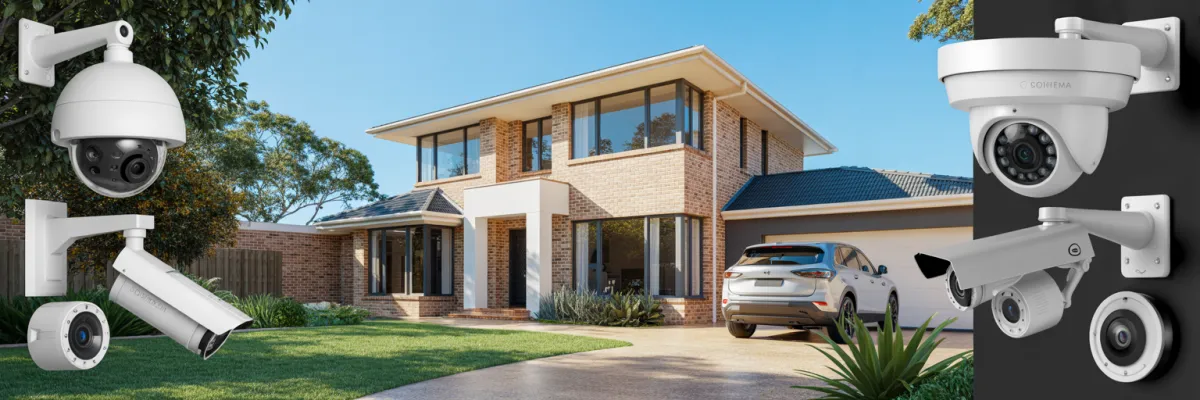
Bullet Cameras vs Dome Cameras
Bullet Cameras - These are the long, tube-shaped cameras you'll see mounted under eaves or on walls. They're pretty obvious, and that's actually the point. They work great for front yards and driveways where you want people to know they're being watched, long-distance viewing, and outdoor locations. They're the workhorses of home CCTV.
Dome Cameras - These are the round, low-profile cameras that sit flush against ceilings or walls. They're more discreet. They work great for indoor areas, covered outdoor areas, and are harder to grab or damage than bullet cameras. The dome design also makes it less obvious which direction the camera is pointing.
For most homes, you'll end up with a mix of both.
Indoor vs Outdoor Cameras
Outdoor cameras are weatherproofed and built to handle various climates. Look for IP65 or IP66 weatherproof rating, temperature tolerance, UV-resistant housing, corrosion-resistant materials, and strong night vision.
Indoor cameras don't need the heavy-duty weatherproofing, so they're usually smaller and sleeker. They often include two-way audio, pan and tilt functions, and pet detection.
Privacy is a bigger deal with indoor cameras. Most families put cameras in common areas—kitchen, living room, hallways—but skip the bedrooms and bathrooms.
Smart Features: What's Worth It?
Person Detection (Actually Useful) - Basic motion detection triggers for everything. Person detection uses AI to recognize human shapes and only alert you when an actual person is detected. This cuts false alarms by about 80%. Worth it? Yes, absolutely.
Facial Recognition (Mostly Marketing) - Some cameras claim they can recognize specific faces. In reality, this works inconsistently. Distance, lighting, angles, masks—lots of factors mess with facial recognition. Worth it? Not really.
Smart Home Integration (Nice to Have) - Some CCTV systems integrate with Google Home, Alexa, or Apple HomeKit. It's a neat party trick, and some people use it daily. But most homeowners just check their phone. Worth it? Nice bonus if your system supports it, but don't pay extra just for this feature.
What Home CCTV Can (And Can't) Do for Your Home
Real-World Benefits
Package Delivery Monitoring - This is probably the number one reason people check their cameras. You get a delivery notification, open your app, and watch the driver leave it by your front door. Or you watch someone steal your package and now you've got clear footage for police.
Kids Arriving Home After School - For working parents, this is huge. Your phone buzzes, you check the app, see them unlock the door and head inside, and you know they're safe.
Screening Visitors Before Answering the Door - Someone knocks. Before you answer, you check your phone. It's a salesperson. You just don't answer. Or it's a delivery that needs a signature. The point is, you get to choose.
Checking on the House While Away - You can check in on your property from anywhere. See that everything looks normal, verify your house-sitter showed up, and go back to enjoying your trip.
The Deterrent Effect
Studies are pretty consistent—visible security cameras reduce the likelihood of your property being targeted. Research has found that CCTV in residential areas leads to reductions in crime overall, with even better results for vehicle-related crimes.
Why? Because most burglars are opportunistic. They're looking for easy targets—unlocked doors, dark houses, properties that look unprotected. When they see cameras, they move on to the next house.
But Here's the Honest Truth - Cameras are a deterrent, not a force field. If someone is determined to target your specific house, cameras alone won't stop them. But those situations are rare. For the vast majority of homeowners dealing with opportunistic crime—package thieves, car break-ins, random burglaries—visible CCTV makes your home a much less attractive target.
Limitations: What CCTV Can't Do
They Don't Physically Stop Crime - Cameras record. They alert. They deter. But they don't lock your doors or tackle intruders. If someone is determined enough and moves fast enough, they can be in and out before you even see the alert.
They Require Power and Internet - No power? Most cameras stop working. No internet? Your wireless cameras can't send alerts or upload footage.
They Need Maintenance - Cameras get dirty. Spider webs cover lenses. Hard drives fail eventually. WiFi cameras drop offline and need resetting.
They Can Create a False Sense of Security - Some people install cameras and then stop locking their doors or become careless about other security measures. Cameras are one layer of security. You still need to lock doors and windows, keep valuables out of sight, and maintain good lighting.

Is Home CCTV Right for Your Family?
Signs You'd Actually Benefit from Home CCTV
Your Kids Come Home to an Empty House - If you've got kids who are just starting to come home alone after school, cameras give you peace of mind. You can verify they got home safely and know what's happening at home while you're at work.
You Travel Regularly - Home CCTV lets you check in on your property from anywhere. You can see that everything looks normal and actually enjoy your holiday instead of worrying.
You've Had Issues with Package Theft - Cameras deter most casual package thieves. And if someone does steal, you've got clear footage to give police.
There's Been Crime in Your Neighborhood - When crime hits close to home, most families start thinking seriously about CCTV. Visible cameras signal "this house has security, try somewhere else."
You've Got Expensive Items at Your Property - Nice cars, bikes, tools, expensive outdoor furniture. If you've got stuff worth stealing, cameras help protect it.
When CCTV Might Not Be Worth It
If you live in a secure apartment building with controlled access, or you're home all the time and have no security concerns, spending money on CCTV might not make sense.
If you're not comfortable with technology, CCTV might cause more stress than it solves. Though most installers will spend time training you, and once it's set up, daily use is pretty simple.
Alternative or Complementary Security Measures
Smart Video Doorbells - If you're not ready for a full CCTV system, a video doorbell is a good entry point. Many brands give you a camera at your front door, two-way audio, and motion detection.
Sensor Lighting - Motion-activated lights are inexpensive and effective. They illuminate areas when someone approaches, which both helps cameras capture better footage and deters people who don't want to be seen.
Alarm Systems - CCTV tells you what happened. Alarms actively scare people off when they're triggered. Many homes have both.
Simple Physical Security - Don't overlook the basics: good quality deadlocks on all doors, window locks and security screens, solid fencing and gates, trimmed hedges, maintained sensor lights, and timers on internal lights when you're away.
Getting Started: Determining How Many Cameras You Need
Start with Entry Points - Every door to your house should be covered by at least one camera. That's your front door, back door, side door, garage door.
Add High-Risk Areas - Driveway, side gates, garage or shed, outdoor entertainment areas.
Typical Home Setups:
4-Camera System: Front door, driveway, back door, side gate
6-Camera System: Front door, driveway, front yard, back door, backyard, side gate
8+ Camera System: Everything above plus additional angles
Most families land on 6 cameras—enough to cover important areas without going overboard.
Final Thoughts: Is Home CCTV Worth It?
Security cameras won't physically stop determined criminals. They won't make your neighborhood crime-free. They won't prevent every possible bad thing from happening at your property.
What they will do is deter most opportunistic criminals, give you peace of mind about your property and family, provide evidence if something does happen, let you monitor your home from anywhere, and help you keep an eye on kids, packages, visitors, and vehicles.
For most families, that's enough. The value isn't in stopping some dramatic heist—it's in the everyday peace of mind and practical security benefits.
The Technology Has Never Been Better - Today's systems are genuinely good. The apps work smoothly. The footage is clear enough to actually identify people. The installation is cleaner and less invasive.
But Only If You'll Actually Use It - The best CCTV system in the world doesn't help if you never check it. The families who get the most value from CCTV are the ones who check cameras when they get alerts, review footage when something seems off, use it to monitor kids coming home, and feel genuinely more secure knowing it's there.
Start Smaller Than You Think - You don't need to cover every square inch of your property on day one. Start with the essentials—front door, driveway, back door, side gate. Get comfortable with those. Then add more cameras later if you identify gaps in coverage.
The Peace of Mind Factor - How much is it worth to not worry about your home when you're away? To check in on your kids with a tap of your phone? To actually enjoy your holiday instead of lying awake wondering if the house is okay?
For some families, that peace of mind alone justifies the investment. For others, it's a nice bonus on top of the practical security benefits.
Only you can decide what that peace of mind is worth to your family.