Thermal Imaging Camera Residential Install: Is It Worth It?
What if your security cameras could see through complete darkness, detect a person hiding behind your wheelie bins, and alert you before they ever reached your front door?
If you've been comparing security camera options for your home, you've probably come across thermal imaging cameras — and immediately wondered whether they're overkill, out of your budget, or genuinely worth considering.
It's a fair question. Thermal imaging camera residential installs are becoming more accessible for homeowners, but they're still a significant step up from a standard HD CCTV system. The technology is impressive — but impressive doesn't always mean right for your situation.
Here's the thing — I talk to homeowners every week who come back with the same mix of curiosity and confusion. The specs sound amazing. Nobody gives a straight answer about whether it's actually worth it for a regular suburban home.
This guide gives you a plain-English breakdown of what thermal imaging cameras actually do, what a residential install involves, and — most importantly — whether the upgrade makes sense for your home, your family, and your budget.
Are Thermal Imaging Cameras Worth It for Residential Use?
Thermal imaging cameras are worth it in specific situations — but they are not the right choice for every home.
Thermal imaging cameras ARE worth it if you:
Have large property boundaries, acreage, or significant dark zones around your home
Live in an area with a documented history of property crime
Want detection capability that works in total darkness, smoke, or heavy rain
Are upgrading an existing HD camera system rather than starting from scratch
Thermal imaging cameras are likely NOT necessary if you:
Have a standard suburban block with good lighting coverage
Are installing a security system for the first time
Are primarily concerned with package theft or monitoring entry points
For most homeowners on a standard block with decent lighting, a quality HD CCTV system is going to do the job well. Thermal imaging becomes a genuine game-changer when you've got large dark zones, bigger blocks, or a specific security concern that standard cameras can't cover.
What Is a Thermal Imaging Camera and How Is It Different From a Standard Security Camera?
Thermal imaging cameras work on a completely different principle to standard cameras — and once you understand how, it changes the way you think about home security altogether.
How Standard HD Security Cameras Work
Your typical HD security camera relies on visible light. During the day, that's straightforward. At night, most cameras switch to infrared (IR) night vision — flooding the area with invisible IR light and picking up the reflection. It works reasonably well out to a certain range, but it's got real limitations.
Dark clothing against a dark background? Hard to pick up. Heavy fog or rain? Image quality drops. Complete darkness beyond the IR range? You're getting nothing useful.
And here's what most people don't think about until after something happens — standard cameras record what happened. By the time the footage is useful, whatever you were hoping to prevent has already occurred.
How Thermal Imaging Cameras Work
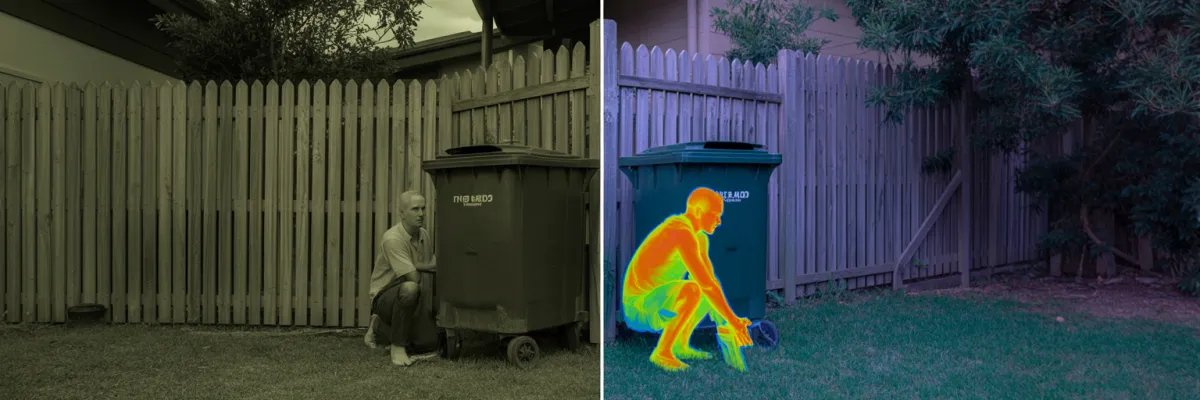
Thermal cameras don't need light at all. Instead of capturing reflected light, they detect heat — the infrared radiation that every person, animal, and vehicle naturally emits.
A human body standing in complete darkness, behind your wheelie bins, at the far end of your rear yard? A thermal camera picks that up instantly and produces a heat-signature image showing exactly where they are.
Think of it like the difference between a torch and a smoke detector — one shows you what's there when you look, the other warns you something is coming before you even see it.
Thermal cameras aren't just recording — they're detecting. They alert you to movement long before anyone gets close to your home. Total darkness, heavy rain, smoke, fog — none of it affects performance.
What Thermal Cameras Can and Can't Do
Thermal cameras are excellent at:
Detecting human presence at distance — even in complete darkness
Triggering alerts before an intruder reaches entry points
Covering large dark zones, wide perimeters, and blind spots
Performing consistently across all weather conditions
What they can't do:
Provide facial-recognition quality footage for police identification
Replace HD cameras at entry points where clear, detailed imagery is needed
Thermal cameras produce a heat-map image — you'll see a person-shaped signature, but you won't be able to identify who it is. For police evidence and prosecution purposes, you still need HD cameras at your key entry points.
This is why a thermal imaging camera residential install almost always works best as part of a hybrid system — not as a standalone replacement for existing cameras.
Thermal Imaging Camera Residential Install — What Does the Process Look Like?
A lot of homeowners assume camera installs are simple — someone turns up, drills a few holes, done. With thermal imaging, there's more to it — and understanding the process upfront means no surprises on the day.
Property Assessment and Placement Planning
Before a single cable gets run, a good installer walks your property with you. This is a proper technical assessment — identifying blind spots, dark zones, and high-risk entry points your current setup isn't covering.
The areas that come up most often are side passages between properties, elevated back fences on sloped blocks, and large rear yards. These are the zones where a standard IR camera is basically useless, and where thermal imaging genuinely earns its place.
The output is a placement plan — a clear recommendation on how many cameras you need, where they go, and why. If an installer skips this step and starts quoting camera numbers without walking the property first, that's a red flag.
Wired vs Wireless Thermal Camera Installation
Wired (PoE) installs run a single ethernet cable to each camera, carrying both power and data. More reliable, more stable, and almost always the better choice for a permanent residential setup. The trade-off is cable runs through roof cavities or walls — but you get a system that doesn't drop out when your WiFi has a bad day.
Wireless installs are easier to reposition and a reasonable option where running cables isn't practical. The catch is that your thermal camera is only as reliable as your WiFi signal.
For most homes, the best result comes from a hybrid setup — thermal cameras wired at the perimeter, HD cameras wired at entry points. Early detection where you need range, identification quality where you need detail.
Integration With Your Existing System
Most modern thermal cameras can be integrated into an existing NVR (Network Video Recorder) setup — you don't necessarily need to start from scratch. Compatibility depends on your current system's brand and generation, so an installer should assess this before you commit.
Most quality thermal cameras now support smartphone-compatible apps for real-time monitoring and push alerts — for a homeowner checking their phone at work, genuinely one of the most useful features of the whole system.
Worth noting — installing security camera systems requires a licensed security installer. It's not something a homeowner can legally do themselves beyond very basic plug-and-play setups.
Where Should Thermal Imaging Cameras Be Installed?
Placement is where security systems earn their keep or fall flat. You can spend serious money on quality hardware and still end up with blind spots because cameras weren't positioned correctly.
The 4 Zones Where Thermal Cameras Deliver the Most Value
1. Large rear yards and back fences On larger blocks, a standard IR camera doesn't have the range to cover a wide rear yard. A thermal camera along your back fence line detects movement at significant distance — giving you an alert before anyone gets near your home.
2. Side passages and blind-spot zones Side passages are consistently overlooked entry points — narrow, often unlit, running directly from the street to your rear yard. A thermal camera covering the full passage length gives you detection capability a standard camera simply can't match.
3. Driveways on corner blocks or set-back properties Two street frontages means more approach angles. A thermal camera covering a corner block driveway picks up foot traffic and vehicle movement that a single entry-point HD camera misses.
4. Pool areas and outbuildings Sheds, garages, and pool areas are high-value targets that often sit outside the coverage zone of cameras focused on the main dwelling. Thermal coverage here means you know immediately if someone's in your backyard.
Where HD Cameras Are Still the Better Choice
Front door and entry point monitoring — at close range, you need identification-quality footage. Thermal shows you someone's there, but won't give police the facial detail they need.
Driveway number plate capture — licence plate recognition requires a specific HD camera at the right angle and distance. Thermal imaging can't do this.
Well-lit zones — where sensor lights or street lighting already provide consistent illumination, HD performs well and thermal adds little extra value.
The Hybrid Approach
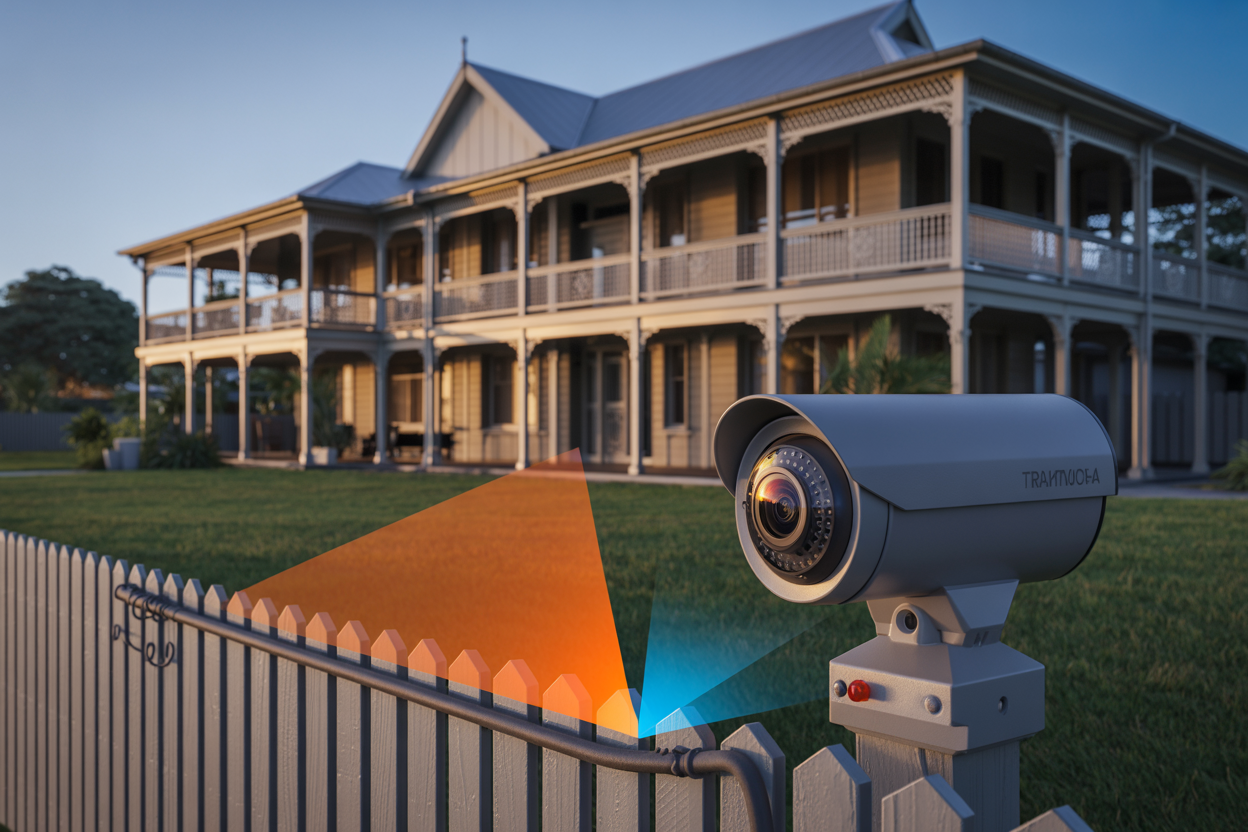
Thermal cameras at the perimeter handle early detection. HD cameras at entry points handle identification. Together it's a two-layer system — the thermal layer tells you something's happening, the HD layer tells you who it is.
A homeowner we worked with had a wide rear yard and a long side passage their existing HD system couldn't cover at night. Adding thermal cameras along the back fence integrated into their existing NVR gave them immediate visibility over a genuine blind spot. That combination — thermal perimeter, HD entry points — is the setup that gets the best out of both technologies.
Will Thermal Imaging Cameras Handle Tough Weather?
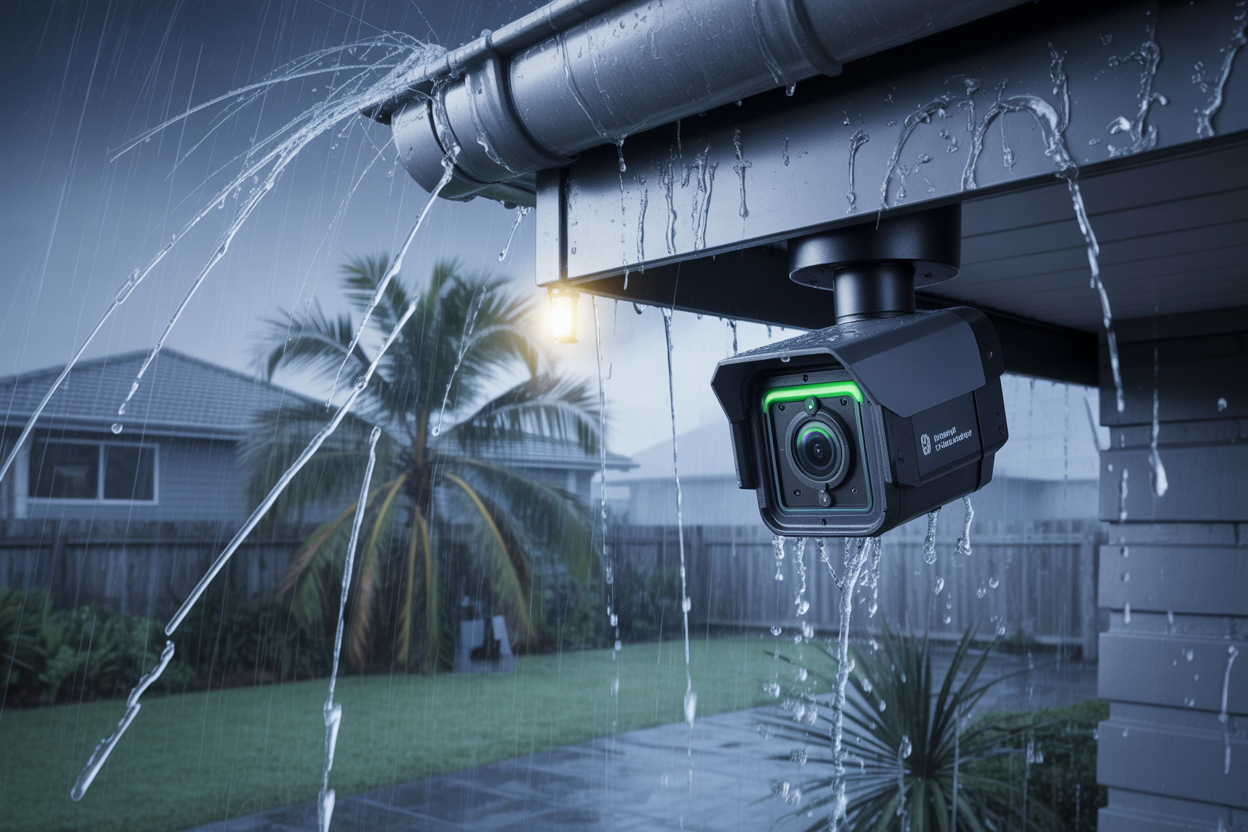
Quality thermal cameras are built for harsh conditions — but not all cameras marketed as "weatherproof" are equal, and it's worth knowing what to look for.
Heat Performance
Thermal cameras detect heat, which means operating in a hot environment requires solid calibration features that distinguish ambient environmental heat from a human body. Quality residential thermal cameras are rated well above what Australian climates realistically produce — but ask your installer for the specific operating temperature range in writing rather than just accepting "weatherproof" at face value.
Storm and Rain Resistance
The relevant spec is the IP (Ingress Protection) rating:
IP66 is the minimum for any camera in an exposed outdoor position. UV-stabilised housing matters too — cheaper housings without UV protection yellow and become brittle within a couple of seasons. Good thermal cameras use UV-stabilised polycarbonate or metal housings built for long-term sun exposure.
Smart Placement as Natural Protection
Experienced installers use your home's architecture deliberately — mounting cameras under eaves for natural protection, reducing weatherproofing load, keeping lenses cleaner, and limiting UV exposure on housings over time.
Avoiding direct western sun is particularly important for thermal cameras — direct afternoon sun produces radiant heat from concrete and fencing that can trigger false alerts. A good placement plan accounts for this. Cable management and surge protection should both be standard inclusions in any professional install.
Thermal Imaging vs Standard CCTV — Which Is Right for Your Home?
The Honest Verdict
For most homeowners on a standard block, a quality professionally installed HD CCTV system protects your family effectively — covering entry points, deterring opportunistic intruders, and providing identification-quality footage for police.
Thermal imaging adds genuine value for larger blocks with dark zones beyond IR range, properties with complex layouts, and homeowners who already have a solid HD foundation and want to add a perimeter detection layer on top.
Don't buy thermal imaging because it sounds impressive. Buy it because your property has a specific gap that thermal fills better than anything else.
The Bottom Line on Thermal Imaging Camera Residential Installs
Thermal imaging isn't the right answer for every home — and any installer who tells you otherwise isn't giving you the full picture.
What it is, in the right situation, is one of the most powerful upgrades you can make to a residential security system. Detecting movement in complete darkness, across a wide perimeter, before anyone reaches your entry points — that's a capability no standard HD camera can match.
The homeowners who get the most from a thermal imaging camera residential install already have a solid HD foundation, a specific coverage gap they can't solve with additional standard cameras, and the budget to do it properly.
If you're earlier in the process — first-time install, standard block, entry-point monitoring as the main concern — start with a quality HD system. Get that foundation right. Thermal imaging will still be there when the time comes to expand.
Either way, the single best thing you can do before spending anything is get a professional assessment. It takes the guesswork out of placement and means whatever you invest goes toward coverage that actually works.