How to Improve Home Security With Cameras: A Complete Brisbane Homeowner's Guide
At 2:47am on a Tuesday, Michelle from Chapel Hill heard something outside her bedroom window. Heart pounding, she grabbed her phone—not to call police, but to open her security camera app. Within seconds, she could see it was just the neighbor's cat knocking over a plant pot. She went back to sleep.
"Before cameras, I would've been terrified for hours," Michelle explains. "Now I just check my phone and know immediately."
This is the real power of learning how to improve home security with cameras. It's not just about catching criminals (though that's important). It's about the daily peace of mind, the ability to check on your home from work, to see your kids arrive safely from school, to verify that package delivery, to simply sleep better at night.
In this guide, we'll share exactly what works—and what doesn't—when it comes to home security cameras for Brisbane homes.
Understanding Home Security Cameras: What Actually Matters
Before you can improve home security with cameras, you need to know what you're actually buying. The security camera market is flooded with confusing marketing jargon designed to overwhelm you.
Wired vs. Wireless: The Truth
Wired cameras - connect directly to your recording system with cables. They're more reliable because there's no WiFi connection to drop out, they never need battery changes, and Brisbane's summer storms won't knock them offline. The downside? Installation takes longer and costs a bit more.
Wireless cameras - connect through your home WiFi. They're easier to install yourself, but here's what the marketing doesn't tell you—they still need power. And during those big Brisbane storms when your internet drops? Your cameras go offline too.
For Brisbane homes, we usually recommend wired cameras for main entry points. Yes, it costs more upfront, but you'll actually have footage when you need it most.
Features That Actually Matter
After installing over 850 systems across Brisbane, here's what actually protects your home:
Resolution: 1080p is enough: Most Brisbane homeowners are perfectly fine with 1080p (Full HD). It gives you clear enough footage to identify faces up to 20 feet away. 4K sounds impressive, but the files are 3-4 times larger, costing you more in storage. Save your money—use 1080p for most cameras.
Night vision: is non-negotiable 65% of break-ins happen after dark according to Queensland Police Service data. Your cameras need infrared (IR) night vision with at least 30 feet of range. Look for cameras with 12-24 IR LEDs—cheap cameras with 4-6 LEDs give you grainy, barely-usable footage.
Smart motion detection: Basic motion detection triggers on everything—tree branches, clouds, your neighbor's cat. You'll get 47 notifications before noon and start ignoring them. AI-powered motion detection learns the difference between a person, a car, and shadows. This is a game-changer.
Weather resistance for Brisbane: You need cameras rated IP65 minimum—preferably IP66 or IP67. Brisbane's 40°C summer days, 80%+ humidity, and UV exposure destroy cheap cameras within 18 months. Good outdoor cameras use metal housings and are rated for -10°C to 50°C operation.

Strategic Camera Placement: Where Burglars Actually Enter
This is where most DIY installations fail. People stick cameras wherever it's easy to mount them, not where burglars actually enter.
The 5 Critical Zones Every Brisbane Home Should Cover
1. Front Door and Porch (34% of break-ins): Your front door is the most common entry point. During daytime break-ins (10am-3pm while you're at work), criminals walk right up, knock to make sure nobody's home, then force entry. Position your camera at eye level across from the door—not mounted right above it where you only see the tops of heads.
2. Back Door and Yard Access (22% of break-ins): Privacy fences that keep neighbors from seeing in also keep them from seeing criminals. Most Brisbane homes have sliding glass doors at the back—easier to force than solid front doors. You need at least one camera covering your back door.
3. Side Gates and Pathways (11% of break-ins): These are the blind spots most homeowners completely miss. That narrow pathway between your house and fence? Perfect for someone to work on a window undetected. A camera at each side gate entrance catches anyone trying to access these areas.
4. Driveway and Garage (15% of break-ins): Your driveway camera serves double duty: catches anyone approaching your garage, plus records license plates of vehicles. Position this camera high enough to capture car plates but angled down enough to see faces.
5. Ground-Floor Windows (18% of break-ins): Queensland's louver windows are particularly vulnerable—you can remove the glass slats without breaking anything. Silent entry. Your existing cameras should be positioned so their coverage zones include ground-floor windows.
Getting the Height and Angle Right
Optimal mounting height: 8-10 feet (2.4-3 meters)
High enough that someone can't easily reach up and redirect the camera, but low enough to capture clear facial features. Too high and you're recording the tops of heads—useless for identifying anyone.
Downward angle: 15-30 degrees
A slight downward angle captures faces, not the sky. If your camera is level, someone wearing a cap or hoodie becomes invisible. A downward angle sees under the brim.
Mobile Access: Monitoring From Anywhere
The mobile app is what you'll interact with every single day. Before you buy any camera system, check the app reviews in the Apple App Store or Google Play Store. Look for:
App store rating of 4.0+ stars minimum - Anything under 4 stars means frustrated users
Both iOS and Android compatibility - Make sure it works reliably on all devices
Live view latency under 2 seconds - When you get a motion alert, you want to check immediately
Family sharing that works - Multiple users should be able to access easily
Smart Alerts You'll Actually Use
Customize detection zones properly Don't set your driveway camera to alert on everything—you'll get notifications every time a car drives past. Draw a zone that only covers your actual driveway and front path. Sarah from Kenmore went from 40+ alerts per day down to 3-4 meaningful ones just by reconfiguring her zones.
Storage: Cloud vs. Local
Cloud storage: costs $60-90/month for 6 cameras with 30-day retention. Over 5 years, that's $3,600-5,400 just for storage.
Local storage: (DVR/NVR) is a one-time cost of $400-800 for a decent recorder. This is what most Brisbane customers choose—no monthly fees, 30-60 days of storage, and the recorder sits in a locked cabinet.
Making Cameras Work as Crime Deterrents
Studies show that visible security cameras make your home 300% less likely to be targeted by burglars. That's the difference between someone trying your house versus moving on to the next street.
The Smart Strategy: Visible + Hidden
Visible cameras - on your front door and driveway tell criminals "not worth it." Burglars interviewed by researchers at the University of North Carolina all said the same thing: "I look for cameras first."
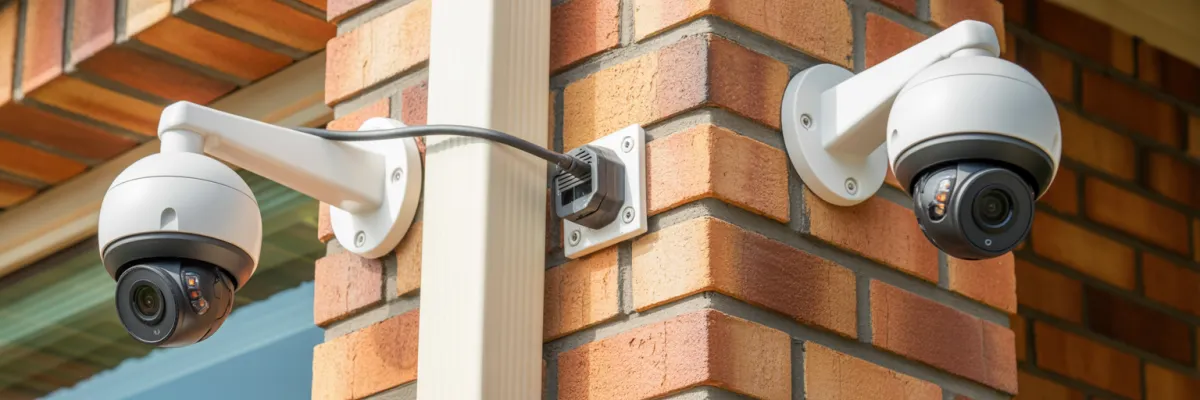
Hidden cameras - catch the bold ones who try to avoid the visible camera by going around the side. Your discrete dome camera gets them. They never see it coming.
Pair Cameras With Other Security Measures
Cameras record what happens. Other security measures prevent things from happening:
Motion-sensor lighting ($30-60 each) - Criminals hate sudden visibility
Proper deadbolts ($80-120 per door) - Security-grade locks that resist forcing
Trimmed landscaping - Remove hiding spots and maintain clear camera sight lines
Locked gates - Every barrier adds time and effort
Alert neighbors - Join local neighborhood watch groups
The Kenmore family we worked with did all of this. Their next-door neighbor got broken into six months later. The family's house? Completely untouched. The burglar literally went past their house to the one next door without visible security.
Monthly Maintenance: 20 Minutes to Stay Protected
Regular maintenance keeps your system working when you actually need it.
Once a month:
Clean lenses with microfiber cloth (5 minutes)
Check camera angles in your app (2 minutes)
Test night vision after dark (3 minutes)
Verify recording is working (5 minutes)
Inspect cables and connections (3 minutes)
Install firmware updates (2 minutes)
Sarah from Kenmore sets a phone reminder for the first Saturday of each month. She does it while having her morning coffee, walks around the house, checks each camera, done.
Common quick fixes:
Camera offline? Reboot router and camera
Too many false alerts? Adjust detection zones
Night vision poor? Clean lens or remove reflective objects nearby
Brisbane's harsh conditions mean cameras need more maintenance than cooler climates. That annual pre-storm season check is worth doing—tighten mounting hardware, re-seal weatherproofing, verify everything works before November storms hit.

Your Home Deserves Protection Now
We've covered everything you need to know about how to improve home security with cameras—from choosing the right equipment to strategic placement, from professional installation to ongoing maintenance.
But all this information means nothing if you don't actually do something with it.
Right now, your home has vulnerabilities. Entry points that aren't monitored. Blind spots where someone could work undetected. No way to check what's happening when you're not there.
I've installed cameras for over 850 Brisbane families. I've heard the same story dozens of times: "I wish we'd done this sooner." Never once has someone said "I regret installing security cameras."
Sarah from Kenmore wishes she'd installed cameras before that guy tried breaking in during her holiday. You can learn from her experience. You can protect your home now, before something happens.
Here's what happens next:
We visit your property for a free security assessment. No obligation, no pressure, just expert advice. We walk around together, discuss your concerns, identify vulnerable areas, and create a custom camera placement plan designed specifically for your home.
Most Brisbane families are fully protected within 7-10 days from that first call.
Your family deserves to sleep peacefully. Your home deserves proper protection. You deserve peace of mind.
No pressure. No obligation. Just expert advice for your home.
✅ Licensed security professionals
✅ Custom camera placement plan
✅ Transparent pricing—no hidden fees
✅ 30-day money-back guarantee
[BOOK FREE ASSESSMENT] or call +61409809577 / 0409809577