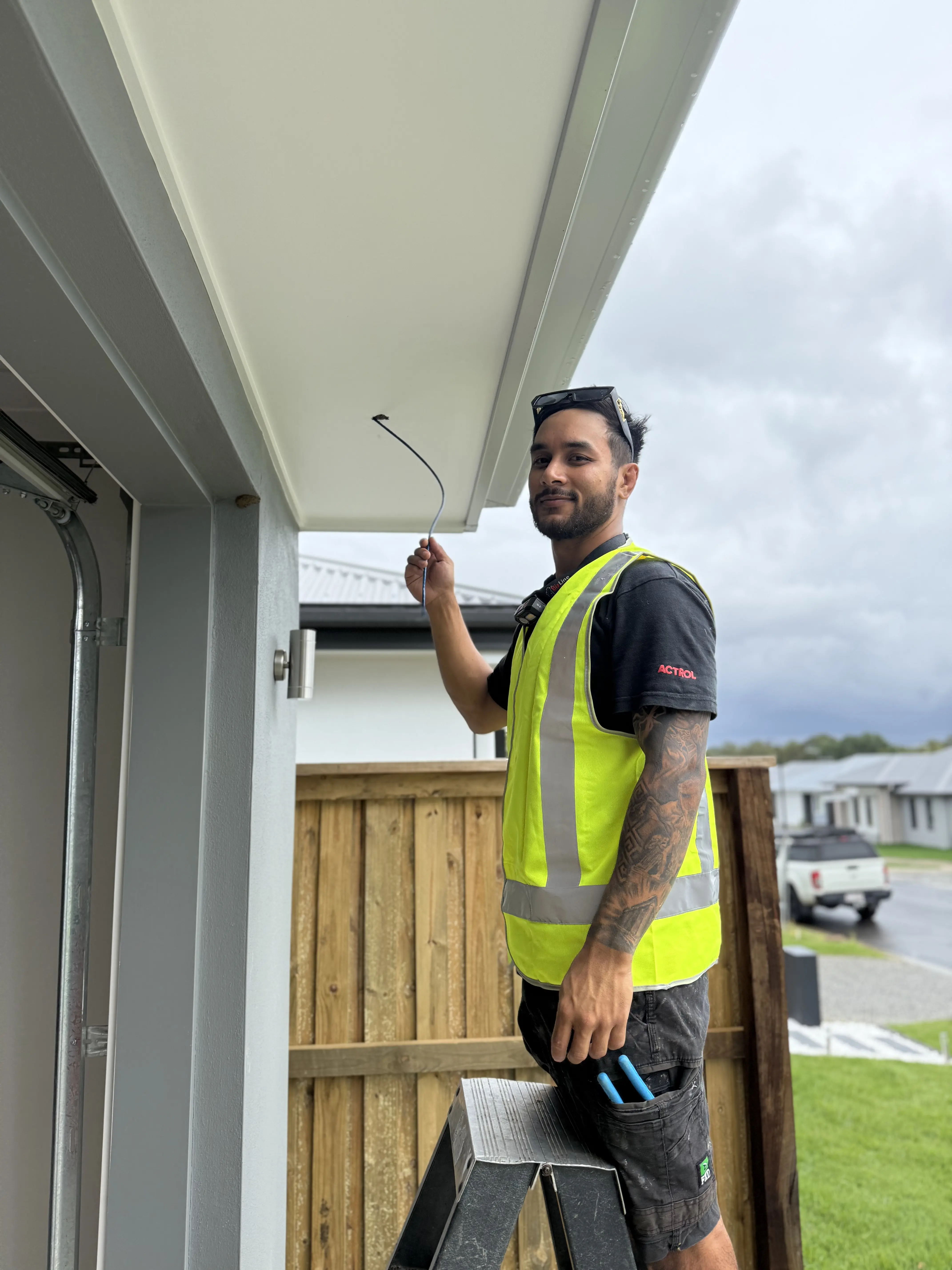

Home Security Camera Comparison: 7 Critical Features
You've spent hours researching home security cameras online. You've read countless reviews, watched YouTube comparisons, and asked for advice in local Facebook groups. But somehow, you're more confused now than when you started.
Hikvision or Dahua? 2K or 4K? Wired or wireless? Do you really need 8 cameras, or will 4 do the job?
Here's the truth: most home security camera comparisons focus on technical specifications that don't matter for the average family. What you actually need is understanding which features will protect your home, let you check on your kids after school, and give you peace of mind when you're away.
This home security camera comparison guide cuts through the marketing jargon and focuses on the 7 critical features that actually make a difference. You'll learn which cameras perform best in subtropical climates, what resolution you truly need, and how to choose a system that works with your lifestyle—not against it.
By the end of this article, you'll know exactly which security camera system is right for your family and budget.
What Features Should I Look For in a Home Security Camera?
When comparing home security cameras, focus on these seven essential features that directly impact your home's protection:
Resolution Quality - Minimum 2K for clear face recognition; 4K for license plate identification
Night Vision Range - Color night vision preferred for better identification
Weather Resistance - IP66 or IP67 rating to withstand storms and humidity
Storage Options - Local recording or cloud storage with adequate retention
Mobile App Access - Reliable smartphone viewing with instant motion alerts
Field of View - 90-110° coverage to minimize camera quantity needed
Two-Way Audio - Communication with family members and deterring intruders
Professional installation ensures optimal camera placement and system integration. Focus on features that match your specific needs—license plate capture, after-school monitoring, or package theft prevention—rather than unnecessary technical specifications.

Resolution Quality - How Clear Do Your Cameras Actually Need to Be?
This is where most people get lost in the home security camera comparison process. You'll see specs like "4MP," "2K," "4K," and "8MP" thrown around like everyone just naturally knows what those numbers mean.
Understanding Resolution in Plain English
When someone says 2K, they're talking about a camera that's 4MP, which means 2560×1440 pixels. That's your sweet spot for most residential security. It's significantly clearer than old 1080p cameras, and it'll show you faces clearly enough to identify who's at your door or who grabbed that package.
4K cameras are 8MP—double the resolution of 2K. Those bigger, sharper images are also 2-3 times larger in file size. That means you're filling up storage faster, you need more internet bandwidth to view them remotely, and you're paying more for the cameras themselves.
Here's what actually matters: 2K cameras give you clear face recognition up to about 8 meters away. 4K steps that up for license plate clarity at longer distances. So if you've got a long driveway or you've had issues with cars getting broken into and you need to catch number plates, then 4K starts making sense.
When 2K is Fine and When You Need 4K
2K works perfectly for:
Front door monitoring
Backyard coverage
Side gate access points
General property overview
Driveway coverage when car is parked close
Most families end up going with 2K for the majority of their cameras. You're checking to see your kids got home from school, you want footage if someone's prowling around, and you need evidence if that package goes missing. 2K handles all of that.
4K becomes worth it when:
You need license plate capture from your driveway
You've got a long driveway from camera to where cars park
Property boundary monitoring on large blocks
You've specifically had car theft issues
Real talk? Get 4K for one or two critical cameras (driveway entrance, street-facing), then 2K for everything else. Best of both worlds without blowing the budget.
Night Vision - Seeing Clearly When It Matters Most
Here's something that'll surprise you: 67% of property crime happens between 6pm and 6am. Which means all those pretty daytime camera specifications don't mean much if your footage turns into a grainy black blob the moment the sun goes down.
Color Night Vision vs Infrared
Most cameras still use traditional infrared night vision—invisible LED lights around the camera lens light up the area, and everything shows up in black and white footage. Works fine, does the job, and it's proven.
Color night vision is newer tech that uses either ambient light (streetlights, house lights) or built-in spotlights to capture full color footage at night. Color footage is genuinely better—you can identify clothing colors, car colors, and facial features way more clearly than black and white.
Police love color night vision footage. It's apparently three times more useful for identification. Instead of "male in dark clothing," they get "male in red hoodie and blue jeans."
The catch? Color night vision cameras cost more, and they need some ambient light to work properly. For your front door where there's usually porch lights and streetlights? Color night vision makes sense. For that dark side gate with zero ambient light? IR does the job and saves you money.
Weather Resistance - Built for Brutal Climates
If there's one area where doing a proper home security camera comparison matters most, it's weather resistance. You can buy the fanciest 4K camera with amazing night vision, but if it dies during summer storm season, you've just wasted your money.
IP Ratings Explained Simply
Every outdoor camera has an IP rating—two numbers that tell you how well sealed the camera is against dust and water.
The first number is dust protection. For outdoor cameras, you want that first number to be 6. That means completely dust-tight.
The second number is water protection, and this is where it matters. You want minimum 6, preferably 7.
IP65 means the camera can handle water jets from any direction. So rain, even heavy rain, won't get inside. This is the bare minimum for outdoor cameras.
IP66 can handle powerful water jets—pressure washer level water. This handles storms better, those sideways rain events where water's coming from every direction.
IP67 goes further—you can temporarily immerse this camera in water. When gutters overflow during massive storms and water's pouring down walls, IP67 cameras keep working.
Subtropical climates are harsh on electronics—humidity, storms, UV exposure, temperature swings. Equipment that works fine in temperate climates struggles in these conditions. IP66/IP67 rating isn't a suggestion, it's a requirement if you want cameras lasting more than a year.
Installation Quality Matters
Here's the truth: the best weather-rated camera in the world won't survive harsh climates if it's installed poorly.
Cable sealing is everything. That point where the cable enters the camera housing? If that's not properly sealed, water gets in. Professional installers use proper outdoor-rated cable glands, silicone sealant, and strain relief.
Mounting angle affects water drainage. Cameras need to be angled slightly downward so water runs off instead of pooling on top. The camera's cable entry point should face downward too so water drips off instead of tracking into the wall cavity.
Professional installers know that regular silicone sealant breaks down in UV light. They use UV-resistant sealant that lasts. They know to create drip loops in cables so water doesn't track into connection points. They understand where water flows during rain and position everything accordingly.

Storage Options - Where Your Footage Actually Lives
Where your camera footage gets stored matters just as much as the cameras themselves. Get this wrong and you'll either be paying fees forever, or you'll have a system that doesn't keep footage long enough to be useful.
Local Recording vs Cloud Storage
Local recording means you've got a physical box somewhere in your house—usually called an NVR (Network Video Recorder). All your cameras connect to this box, and it records everything to an internal hard drive.
The big advantage? Once you've bought the equipment, there's no ongoing costs. No monthly subscription, no cloud fees, no surprise bills. You own your data. It's physically in your house. Nobody else has access to it, and you don't need internet for the cameras to record (though you do need internet to view them remotely).
The downsides? That recording box can be stolen. If someone breaks in, finds your NVR, and takes it with them, your footage goes too. Hard drives fail eventually too. Power goes out? Cameras stop recording unless you've got battery backup.
Cloud storage means your footage gets uploaded to the camera company's servers over the internet. No physical recording box needed.
Advantage here is that if someone steals your cameras or smashes them, your footage is already safely uploaded to the cloud. House fire? Flood? Your footage survives because it's not stored locally.
The catch is the ongoing cost. Most cloud storage services charge monthly or annual fees. Internet dependency is real too—cloud storage needs solid internet to upload footage constantly.
Hybrid Solutions Often Make Sense
Here's what a lot of families are doing now: hybrid storage.
Local recording as primary storage, cloud backup for critical cameras. You've got an NVR recording all your cameras. That's your main storage, no monthly fees. But then you add cloud backup for your most important cameras—front door, driveway, maybe one more.
If something happens, you've got footage locally. If the worst happens and someone steals your NVR or there's a fire, your critical angles are backed up to the cloud. Best of both worlds.
Mobile App Access - Nobody Wants to Sit at a Computer Monitor
You could have the best cameras in the world, but if the app is garbage, you won't actually use your system.
Think about it: you're at work, you get a notification, and you want to check what's happening at home. The app needs to load fast, show you clear footage, and not crash or freeze up.
App Reliability Makes or Breaks Your System
Good apps open within seconds, show your live camera feeds quickly, and don't crash when you're trying to check something important. They work consistently on both iPhone and Android. The notifications actually work and arrive within seconds of something happening.
Terrible apps take forever to load, if they load at all. Live feeds buffer and freeze constantly. Notifications arrive way too late, or don't arrive at all, or arrive dozens of times for the same event.
You can't tell which category an app falls into by looking at camera specs. You need to actually test the app, read real user reviews, and talk to people who've been using the system.
Push Notifications That Actually Work
The ideal notification system alerts you within seconds of motion being detected. You get a push notification on your phone with a preview image or short video clip showing what triggered it. You can tap the notification and immediately see live footage.
Common notification problems include major delays, and false alarm spam—camera triggers on trees moving, clouds, shadows. You get dozens of notifications until you just turn them off entirely. Then you miss the actual important alerts.
Most decent systems let you set up motion detection zones—you draw boxes on the screen showing which areas to monitor and which to ignore. AI-based detection is getting better at filtering out false alarms, differentiating between people, vehicles, and random motion.
Multiple User Access
Most families want both parents to have app access, and maybe older kids too. Good systems let you add multiple users easily—just send them an invitation through the app, they download it and log in with their own account.
Problem systems either limit how many users you can add, or make everyone use the same login credentials. Sharing one username and password is annoying and you can't see who's viewing what or when.
Field of View - Covering Your Property Without Blind Spots
Field of view determines how much your camera sees in a single frame. Get this right and you need fewer cameras. Get it wrong and you'll be adding more cameras to fill the gaps.
Wide Angle vs Standard Lenses
Camera lenses are measured in degrees—that's how wide the viewing angle is. 90-110° is the sweet spot for most homes. This gives you good coverage without distorting the image too much.
Ultra-wide lenses (130°+) sound great—see more area with fewer cameras, right? The problem is distortion. Those wide angles create that fisheye effect where edges are warped and stretched. Someone standing at the edge of frame might not be clearly identifiable.
Narrow angle lenses (60-80°) are for specific targets. These give you zoom and detail but cover less area. They're what you want pointing down a long driveway to catch license plates.
The trade-off is always the same: wider coverage means less detail at distance, narrower focus means more detail but less area covered.
How Many Cameras Do You Actually Need?
Standard properties: Most families end up with 4-6 cameras for complete coverage. Front door/entry, driveway, backyard, side gate access—that's your basic four-camera setup covering entry points. Add more for garage, better driveway coverage, or back fence line.
Essential areas vs nice-to-have: Start with must-have coverage—main entry door, driveway/car space, primary access points. These catch 80% of security concerns. Package theft, break-in attempts, car tampering—all covered. Add secondary cameras (back fence line, pool area, garage interior) if budget allows.
Avoiding Blind Spots
Every property has potential blind spots. Side gate blind spots are super common. You've got a camera on the front and back, but that side gate? If it's not covered, that's exactly where someone will try to access your property.
Solution is either a dedicated side gate camera, or positioning your front and back cameras at angles where they can see down the side as well. Overlapping coverage catches these gaps.
Landscaping creates obstacles too. When you install cameras, your shrubs and trees are one size. Months later, they've grown and now they're blocking camera views. Think about growth patterns when positioning cameras.

Two-Way Audio - Communication When You Need It
Two-way audio sounds gimmicky when you're doing a home security camera comparison, but once you've got it, you use it way more than you'd expect.
The feature lets you speak through your security camera like an intercom. You see someone on your camera feed, tap the microphone button, and your voice comes out of the camera's speaker.
When It Actually Gets Used
After-school kid communication is probably the number one use case. Your kid gets home, you're still at work. You get a notification, see them on camera, and can check in. Or they forgot their key again, and instead of them sitting on the porch, you can talk to them through the camera and tell them where the spare key is.
Delivery driver instructions come up all the time. You see the driver approaching your door, you're watching on camera, and you can give them quick instructions about where to leave packages safely.
Deterring door-knockers and salespeople without confrontation. Someone approaches your door, rings the bell, you're not interested. Instead of ignoring them or opening the door, you just speak through the camera: "Not interested, thanks." They know you're there, they move on.
Audio Quality Varies Wildly
Good audio systems have clear speakers with enough volume that someone standing several meters from the camera can hear you easily. The microphone picks up their response clearly too. There's minimal lag—actual conversation is possible.
Terrible audio systems have tinny speakers that sound like they're underwater. Volume is so low that someone has to walk right up to the camera to hear you. The microphone picks up every bit of wind noise and distorts actual voices. And the lag is brutal—delays that make conversation impossible.
Audio lag is usually internet-related. If you're on good internet and the camera company's servers aren't overloaded, lag is minimal. If your internet's average or their servers are slow, lag gets painful
Making Your Decision - What Actually Matters
You've made it through all seven critical features in this home security camera comparison. Let's bring it back to what actually matters for your home.
Resolution—you need 2K minimum for face recognition. 4K only if you're capturing license plates from distance. Night vision—reliable performance when the sun goes down is what matters. Weather resistance—IP66 absolute minimum, IP67 better. This isn't optional in harsh climates.
Storage—local recording gives you no ongoing costs. Cloud storage gives you backup if equipment's stolen. Mobile app—needs to load fast and stream reliably. Field of view—90-110° covers most residential needs. Two-way audio—surprisingly useful for families with kids.
Everything else—AI detection, facial recognition, smart home integration—is bonus stuff. Nice to have, but not essential for protecting your home and family.
Ready to Get Started?
If you want help figuring out what actually makes sense for your property—not what some sales script says you need—professional assessments help you understand your options.
Professional installers walk your property, discuss your actual concerns, show you where cameras would go and what they'd see, and give you honest recommendations based on what works in your climate.
Your home security camera comparison doesn't need to be perfect—it needs to be right for your family, your property, and your budget. There's no "best" system that works for everyone. There's the system that works for your specific situation.
Start with solid basics—proper coverage of entry points, appropriate resolution, weatherproof equipment, reliable apps, professional installation. Everything else builds from there.
Because at the end of the day, this is really about being able to check your phone and see your kids got home safely. Going on holiday without worrying about the house. Sleeping through the night instead of lying awake wondering if every noise is something serious.
That peace of mind? That's worth investing in properly.
Phone: +61409809577 / 0409809577
Email:[email protected]